

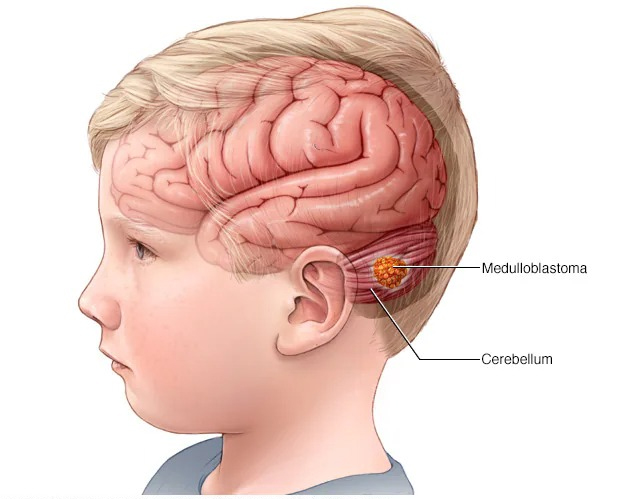
Medulloblastoma is a malignant embryonal tumor of the cerebellum that most commonly affects children but also occurs in adolescents and adults.
Origin: cerebellum (often the vermis in children; hemispheres more common in adults).
Behavior: highly cellular, aggressive, can seed the cerebrospinal fluid (CSF) and metastasize along the neuraxis.
Most common malianant brain tumor in children (peak incidence 3-8 years), Less common in adults: adults have different subgroup distribution (more SHH)
Rough overall 5-year survival in modern cohorts ~70-75%, but varies widely by subgroup
Symptoms : from raised intracranial pressure headache, nausea/vomiting, morning worsening.
Cerebellar dvsfunction: ataxia, gait disturbance, dysmetria. Rapid onset is common (weeks)
Signs of obstructive hydrocephalus may be present.
If leptomeningeal spread: cranial nerve palsies, back pain, limb weakness, or radicular symptoms.
○ Highly variable
○ WNT: best outcome (>90% long-term
survival).
○ SHH: variable - good for some, poor if
TP53-mutant.
○ Group 3: worst outcomes, especially with
MYC amplification and metastasis.
○ Group 4: intermediate outcomes
○ Other important prognostic factors: age
metastatic status, extent of resection,
histology, and molecular markers
Neurocognitive deficits: learning, attention, processing speed; worsen with younger age at irradiation.
Endocrinopathies: growth hormone deficiency hypothyroidism, gonadal dysfunction, adrenal insufficiency.
Hearing loss: cisplatin-related ototoxicity.
Secondary malignancies: risk from cranial irradiation and some chemotherapies.
Psychosocial and educational challenges: Lifelong follow-up and rehabilitation services (endocrine, audiology, neuropsychology education) are essential.



 +91 89434 11000
 drpraveena@drpraveena.com
 +91 89434 11000
 drpraveena@drpraveena.com